
First Impressions of Chengdu in the Fog
To get to Bangkok, I had a nine-hour layover in Chengdu, the capital of Sichuan Province, located in the southwest of the People’s Republic of China. It was my first time on Chinese soil, and I had the opportunity to explore this historic city for a few hours.
To visit Chengdu I didn’t need a visa. For the past two years, there has been a new six-day visa-free transit policy. I had landed at five in the morning, and the flight with Sichuan Airlines was far from comfortable. The plane looked old, and the legroom was extremely tight. Luckily, I had an aisle seat. My neighbor, however, didn’t seem very aware of the space he was taking up. He wasn’t particularly big, but he had a tendency to invade my space—until he elbowed me in the navel. I had to make him understand that, on a flight of more than ten hours, maintaining that situation was unsustainable.
Visiting China for the first time
I was at the immigration counters in no time, with the required form and my passport. There were quite a few people, and it took a while before I was attended to. I felt a thrill when the officer stamped the first Chinese seal in my passport. “Hopefully it won’t be the last,” I thought.
The fastest way to get from the airport to downtown Chengdu is by metro. The journey takes about an hour. I bought an unlimited one-day pass, which cost me 20 yuan—around €2.40.
I was in China! I could feel the fatigue from the flight, but it didn’t dampen my desire to explore, even briefly, the first Chinese city I had ever visited. The metro is modern and comfortable. I asked people in the carriage where I should get off, because I wasn’t at all sure. I had to transfer to another line that would take me to Tianfu Square, right in the city center.
I had no mobile connection, and at the airport I couldn’t manage to connect to the Wi-Fi. Luckily, I had downloaded an offline map on Osmand, which would help me get my bearings. Chinese is a language I don’t understand, and it takes some effort to get used to it. And that, far from stressing me out, amuses me.
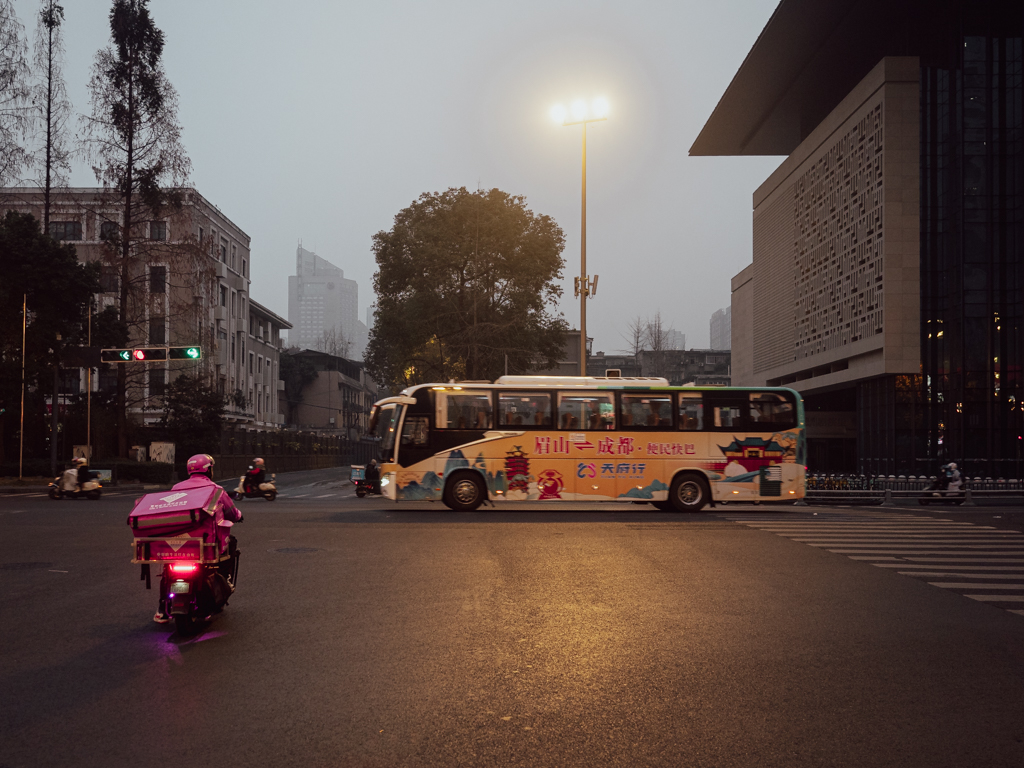
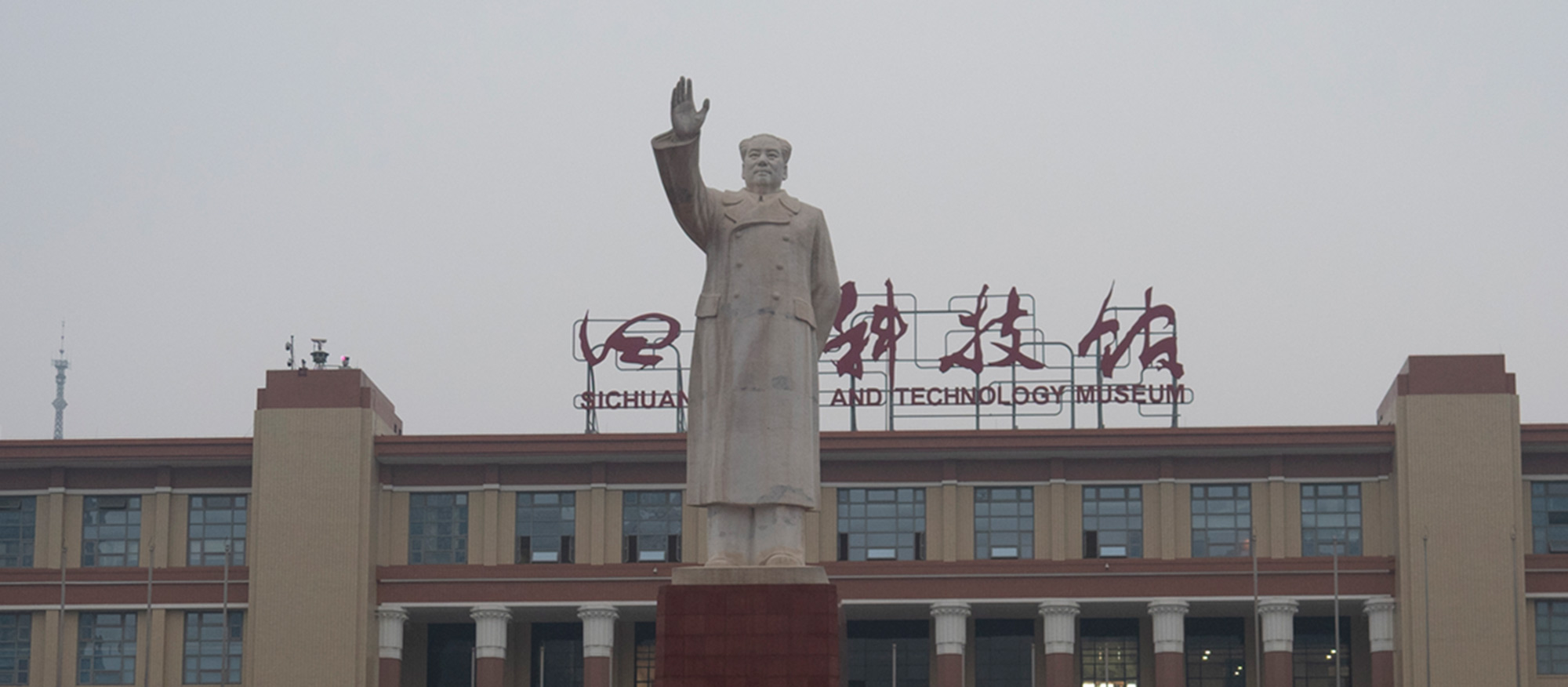
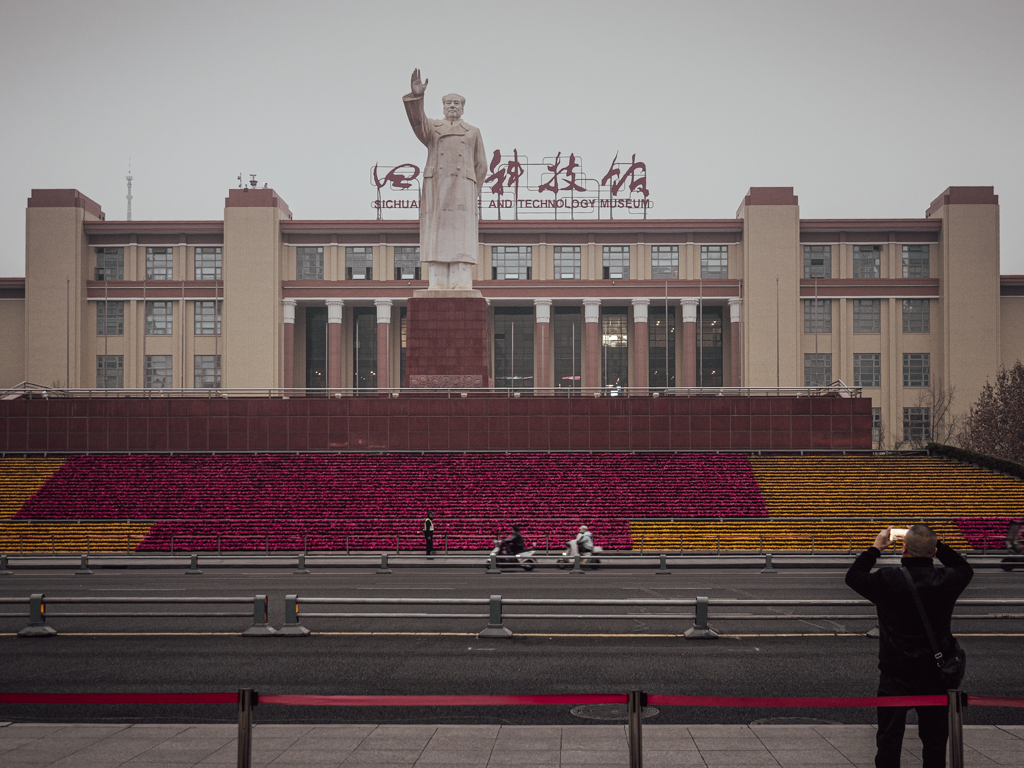
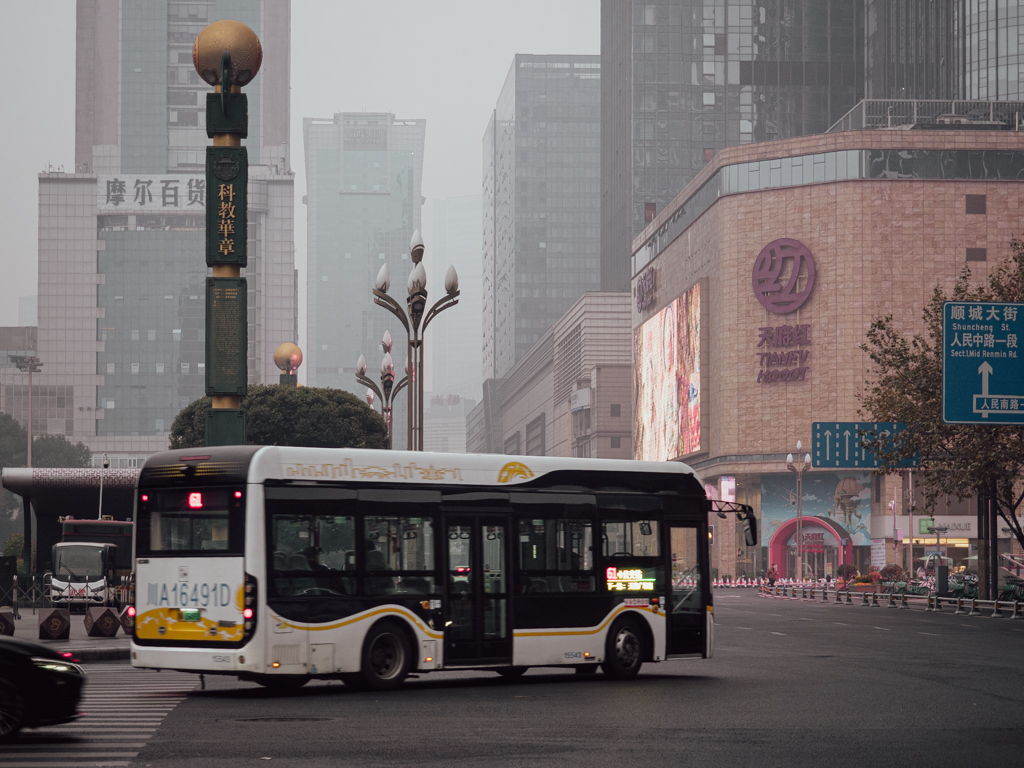
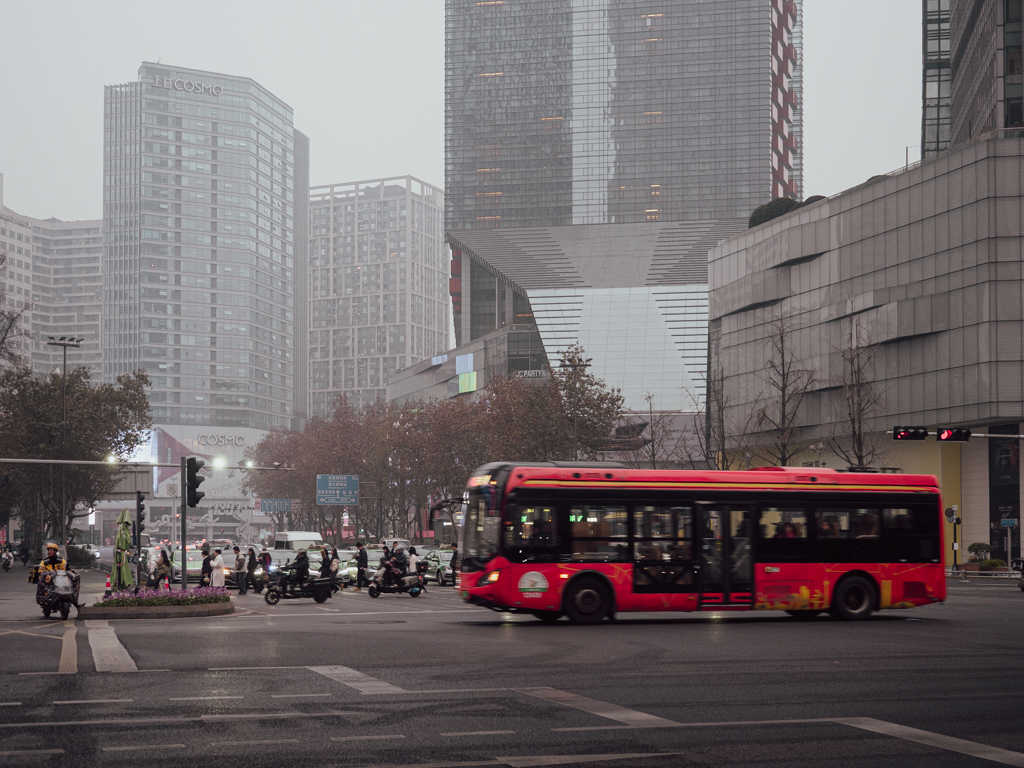
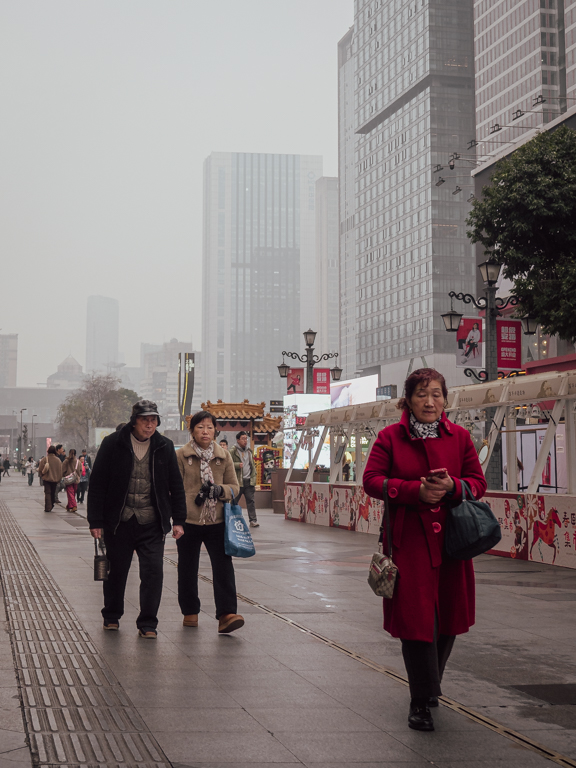
When I came out of Tianfu Square metro station, the street was shrouded in thick fog. There wasn’t much pedestrian traffic. It was seven thirty. The air was cool and the atmosphere grey. Almost all the vehicles on the road are electric. I had no idea which way to go. I saw nothing but buildings, and everything looked the same. From Tianfu Square itself, it’s impossible to ignore the large statue of a man with one hand raised. It is a marble sculpture representing Mao Zedong, a communist revolutionary, founder and leader of the People’s Republic of China from 1949 until his death in 1976. He proclaimed the new republic in Tiananmen Square, turning the country into a communist state, and led it through profound social and agrarian transformations, such as the “Great Leap Forward” and the “Cultural Revolution.”
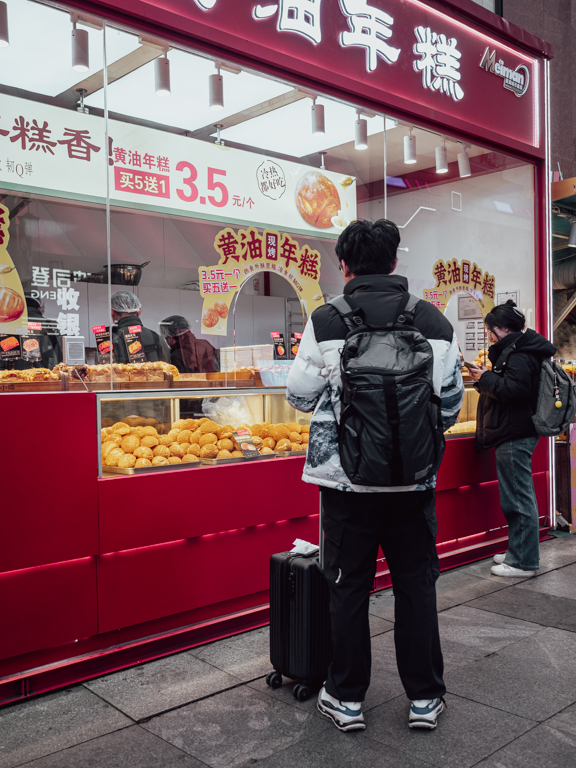
The fog didn’t lift, and everything remained grey. I would have liked to have a coffee and eat something, but I couldn’t do either. Credit cards aren’t accepted anywhere. Everything is paid for through an app linked to a debit or credit card. It was explained on the small screen on the plane, but I couldn’t be bothered to start fiddling with my phone… Lately, I find that so much technology overwhelms me. I find it boring.
 |
 |
 |
 |
 |
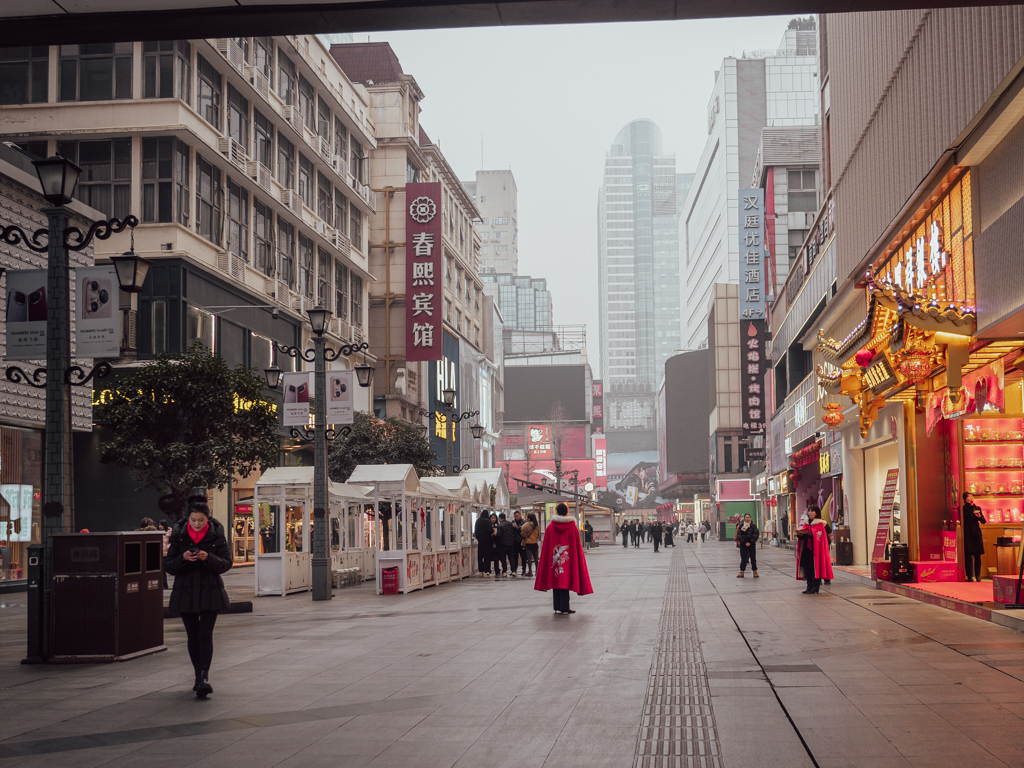 |
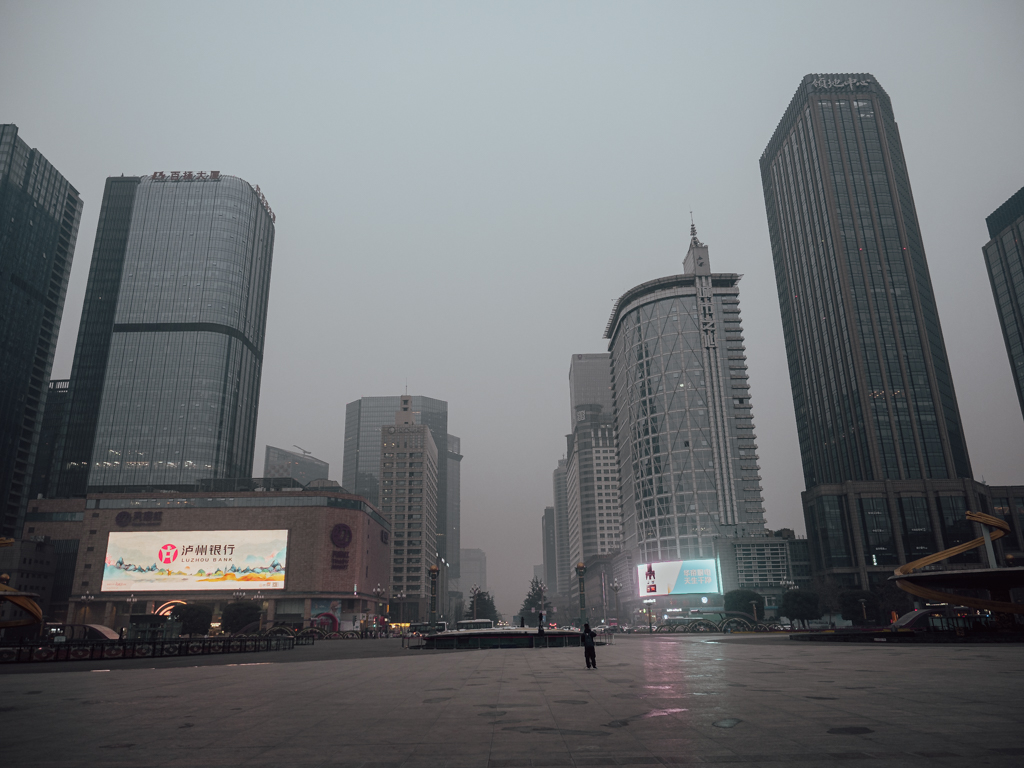
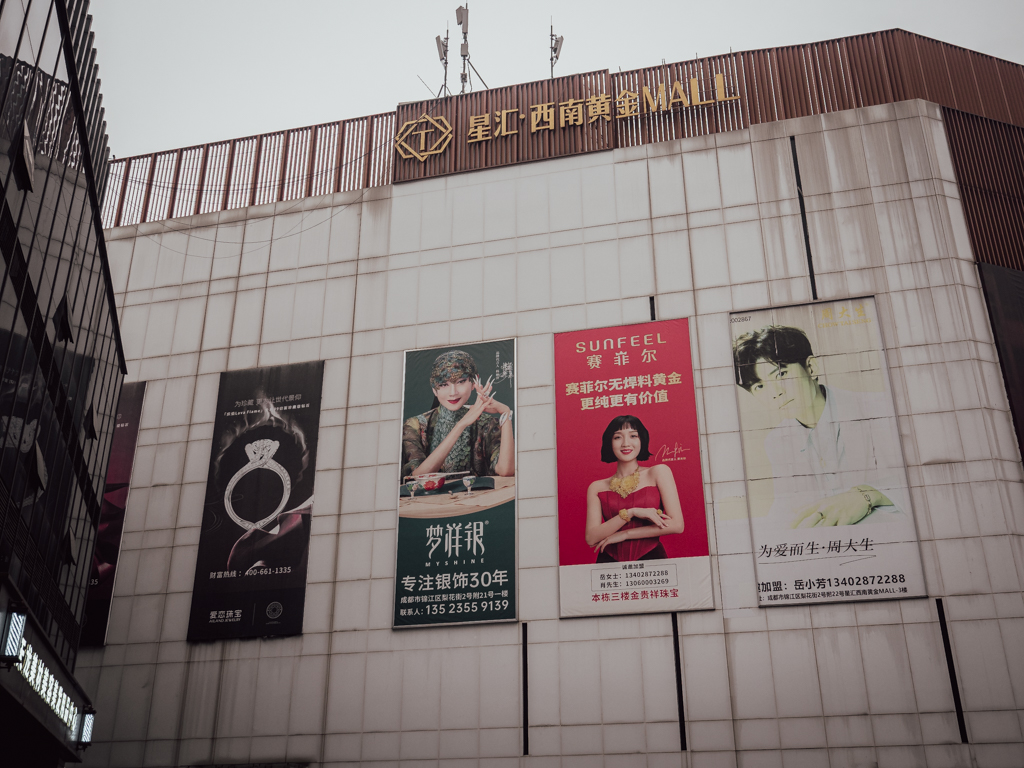
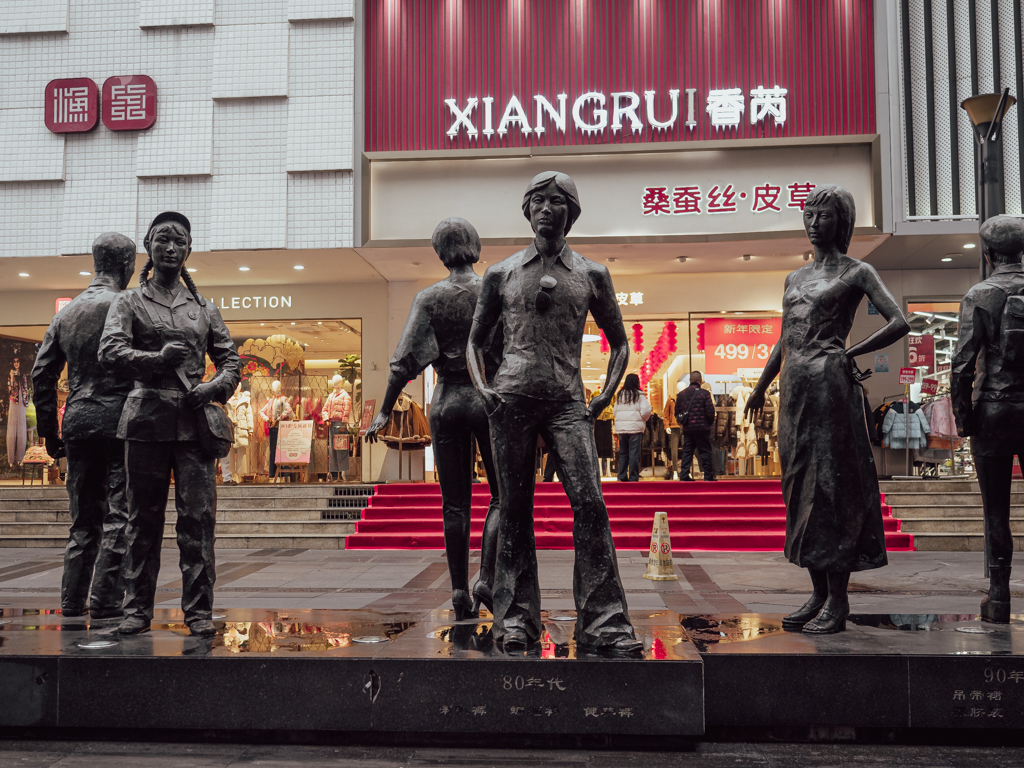
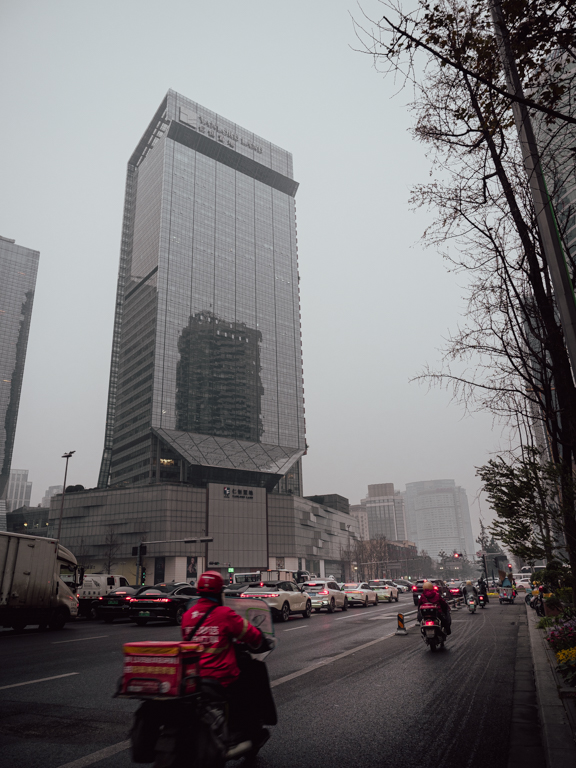
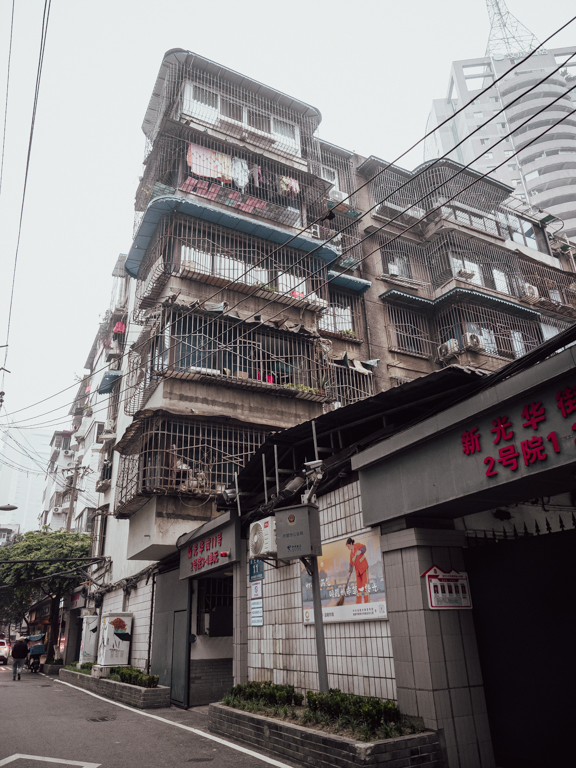
The city is built with tall, modern buildings, wide avenues, and promenades full of shops. The atmosphere was not inspiring at all. Everything felt very impersonal. Perhaps I perceived it that way because of the exhaustion I was carrying. Surely there are other parts of the city that are more interesting. I didn’t have more time to explore one of the oldest cities in China, known as the “Land of Abundance,” which is at the same time a modern metropolis with more than twenty million inhabitants.
 |
 |
 |
 |